

 Loading...
Article Contents
- 1. Section 1: General information
- 1.1. Pattern information
- 1.2. Surface information
- 1.3. Pattern parameters
- 1.4. Supplies information
- 2. Section 2: Zones
- 2.1. Ratio
- 2.2. Pattern length
- 2.3. Volume
- 3. Section 3: Composite graph
- 4. Summary
Note: This article is only available to Bowling This Month subscribers.
So far in this series, we have looked at the unit of oil and the operation of Brunswick lane machines. In this final article, we will put all of that information together and discuss in detail what Brunswick presents on their oil pattern sheets. We will learn more about the machine’s features as we go and find out how to interpret the graphs and tables that are provided on the pattern sheets.
A Brunswick pattern sheet in its complete form is shown in Figure 1, which shows Brunswick’s Phantom oil pattern. It was downloaded from the Brunswick online pattern library, where you can find various other patterns, too. They look significantly different from Kegel’s oil patterns, but remember, as we saw last time, the machines work in a very different way, and the pattern sheets reflect that. Like Kegel’s oil pattern sheets, Brunswick’s pattern sheets have been updated over time, both cosmetically and to reflect advances in the lane machines themselves, but the information they provide is the same across all versions.
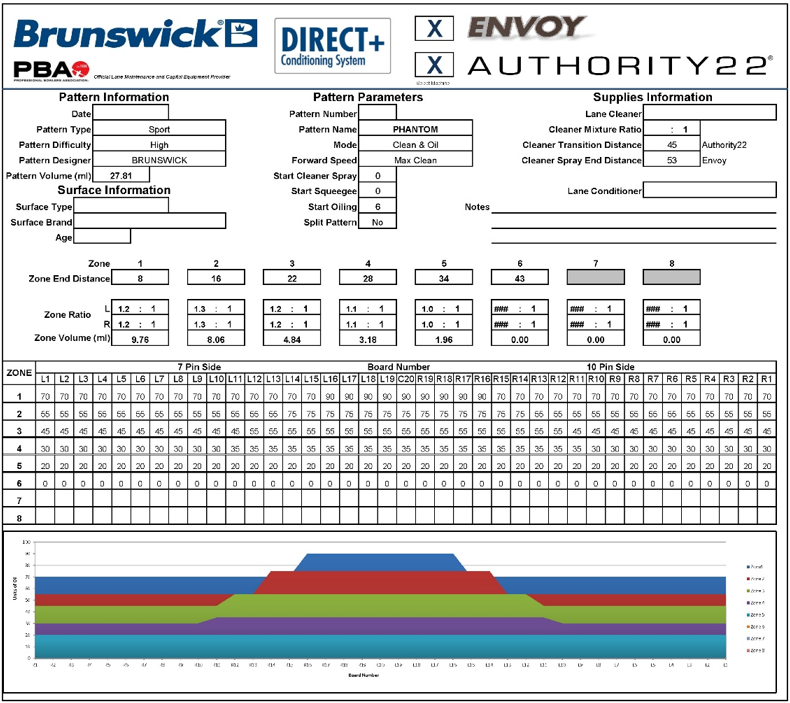
Figure 1: The Phantom oil pattern by Brunswick.
We will now break the pattern sheet down into three sections, which we will discuss in detail below.
Section 1: General information
Right at the top, we see the Brunswick logos and their link to the PBA. Direct+ Conditioning system (discussed in the previous article) is the name of the system that Brunswick uses in their machines, and applicable lane machines are shown on the right. The Envoy and the Authority22 are listed in this example, but on more recent pattern sheets, the MAX machine is shown here as well.

Figure 2: The first section of a Brunswick oil pattern sheet.
Beneath this top row of logos and applicable lane machines is information about the pattern itself and the environment that is being created. I will go through each box here for completeness, even though some are self-explanatory.
Pattern information
Date: This lists the tournament date, or perhaps the date the pattern was created.
Pattern type: The category of pattern—sport, challenge, or recreational—as per the USBC definition, which is dependent on the side-to-side ratio of the oil pattern. Sport is less than 4:1, challenge is between 4:1 and 8:1, and recreational is greater than 8:1.
Pattern difficulty: High for sport, medium for challenge, and low for recreational.
Pattern designer: The name of the individual(s) or group that has designed the oil ...
Already a premium member? Click here to log in.